The Venmo Small Business Grant program first gained widespread attention in 2020 when Venmo announced a commitment to helping small businesses recover from economic disruptions caused by the COVID-19 pandemic. Since then, the program has evolved into an annual or periodic initiative that provides cash grants, promotional support, and mentorship opportunities to eligible business owners. Unlike traditional loans, these grants do not need to be repaid, making them an attractive option for entrepreneurs who want to invest in their operations without taking on debt. Understanding the structure, requirements, and timeline of the Venmo Small Business Grant is the first step toward putting together a competitive application.
In this first part of our comprehensive guide, we will cover the foundational information you need before you begin the application process. We will explain what the Venmo Small Business Grant actually is, break down the award amounts and benefits, and outline the eligibility criteria that determine whether your business qualifies. A useful summary table is included to help you quickly assess whether your business aligns with the program’s requirements. Let’s dive in.
1. What Is the Venmo Small Business Grant?
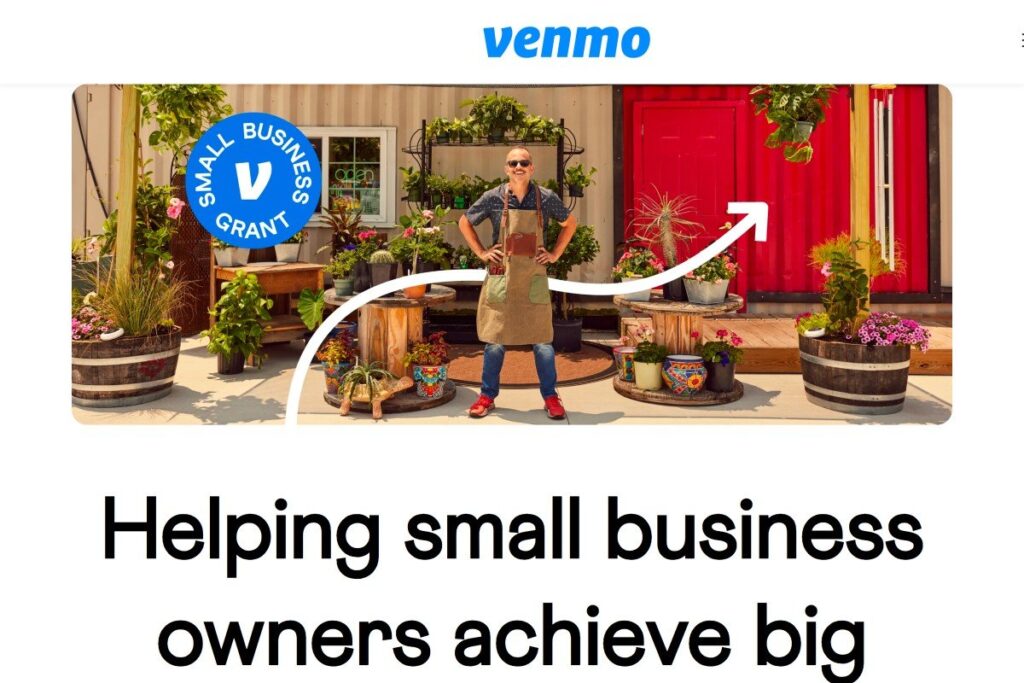
The Venmo Small Business Grant is a financial award program created by Venmo to support small businesses in the United States. The program is designed to provide direct cash grants to eligible small business owners, along with additional resources such as marketing exposure on Venmo’s platforms and access to business mentorship. Venmo, which began primarily as a person-to-person payment app, has expanded its services to include Venmo Business Profiles, allowing merchants to accept payments from customers. The grant program reinforces Venmo’s commitment to the small business community by giving back to the very entrepreneurs who use its platform.
Venmo typically runs the Small Business Grant program on an annual cycle, with application windows announced through Venmo’s official website, social media channels, and email newsletters. The program is not a continuous, open-ended opportunity; business owners must pay close attention to announcement dates and submission deadlines to avoid missing out. Past iterations of the grant have opened for applications in the spring or summer months, with winners announced several weeks after the submission period closes.
What sets the Venmo Small Business Grant apart from many other small business grants is its emphasis on community and storytelling. Applicants are often asked to share their business journey, explain how they would use the grant funds, and describe the impact their business has on their local community. This narrative-driven approach means that even very small or home-based businesses can compete effectively if they can articulate a compelling vision. Additionally, Venmo has partnered with organizations that support underrepresented entrepreneurs, further broadening the reach and inclusivity of the program.
Because the search intent behind queries like “venmo small business grant” is often navigational, business owners should bookmark Venmo’s official grant page and follow Venmo’s verified social media accounts to stay informed about upcoming application periods. Navigating directly to the official source ensures you receive accurate information and avoid third-party scams that may attempt to charge fees for grant access. The genuine Venmo Small Business Grant is free to apply for and does not require any payment or purchase.
2. Grant Amounts and What the Award Package Includes
Understanding the financial scope and supplementary benefits of the Venmo Small Business Grant helps applicants determine whether the program aligns with their funding needs. While award amounts and specific benefits can vary from one grant cycle to the next, Venmo has historically offered substantial cash grants along with a suite of non-monetary support.
In recent grant cycles, Venmo has awarded $10,000 in cash to each selected small business. This direct financial award can be used for a wide range of business purposes, including purchasing equipment, funding marketing campaigns, renovating physical spaces, hiring additional staff, or covering operational expenses. Because the grant is unrestricted, recipients have flexibility in how they allocate the funds to best meet their unique business needs. However, Venmo does encourage recipients to use the money in ways that foster growth and strengthen their connection to the community.
Beyond the cash award, the Venmo Small Business Grant package typically includes several valuable non-monetary components:
- Promotional exposure on Venmo’s platforms: Grant recipients often receive featured placement in Venmo’s app, email newsletters, or social media channels. This visibility can introduce the business to thousands of potential new customers.
- Business mentorship and coaching: Venmo has partnered with organizations that provide expert guidance on topics such as financial management, digital marketing, and business strategy. Recipients may gain access to one-on-one coaching sessions or group workshops.
- Venmo Business Profile optimization support: Winners may receive tips and tools to enhance their Venmo Business Profile, making it easier for customers to find and transact with them through the app.
- Networking opportunities: Some grant cycles include invitations to virtual or in-person events where recipients can connect with fellow entrepreneurs, industry experts, and Venmo representatives.
The combination of cash funding and promotional support makes the Venmo Small Business Grant particularly valuable for businesses that are already using or planning to use Venmo as a payment method. The increased visibility within the Venmo ecosystem can lead to sustained customer growth long after the initial grant funds have been spent.
It is important to verify the exact award details for the current grant cycle by visiting Venmo’s official small business grant page, as amounts and benefits may be updated from year to year. Some special editions of the program, such as those tied to specific causes or partnerships, may offer different award structures.
3. Eligibility Requirements for the Venmo Small Business Grant
Before investing time in preparing an application, business owners should carefully review the eligibility criteria for the Venmo Small Business Grant. These requirements determine who can apply and help ensure that the program supports the types of businesses it was designed to assist. While specific criteria can change between grant cycles, the following eligibility factors have been consistently present in recent iterations of the program.
Business Size and Structure
The Venmo Small Business Grant is aimed at genuinely small enterprises. Eligible businesses typically must have 10 or fewer employees, including the owner. Sole proprietorships, single-member LLCs, partnerships, and small corporations all generally qualify as long as they meet the employee count threshold. Businesses with more than ten employees are usually not eligible. Additionally, the business must be based in the United States and operate within one of the fifty states, the District of Columbia, or qualifying U.S. territories.
Venmo Business Profile Requirement
To apply for the grant, a business generally must have an active Venmo Business Profile. This is a key requirement that ties the grant program directly to Venmo’s ecosystem. A Venmo Business Profile allows customers to find and pay the business through the Venmo app, and it provides tools for tracking payments, issuing refunds, and managing customer interactions. Business owners who do not yet have a Venmo Business Profile can create one for free through the Venmo app, and they are encouraged to do so well before the application window opens to ensure their profile is fully set up and verified.
Business Age and Operational Status
Applicants are typically required to have an active and operating business that has been in existence for a minimum period of time. In past cycles, Venmo has required that the business have been operational for at least six months to one year prior to the application date. Startups that are still in the planning phase or have not yet generated revenue are generally not eligible. The business must also be in good standing with applicable local, state, and federal regulations, including any required business licenses or permits.
Excluded Industries and Business Types
Like many grant programs, the Venmo Small Business Grant excludes certain categories of businesses from eligibility. Commonly excluded industries include businesses engaged in illegal activities, gambling, adult entertainment, multi-level marketing operations, and businesses that are publicly traded. Nonprofit organizations, government entities, and businesses owned or controlled by Venmo or PayPal employees are also typically ineligible. Always review the official terms and conditions for a complete list of excluded categories before applying.
Owner Requirements
Applicants must generally be legal residents of the United States and at least 18 years of age (or the age of majority in their state of residence). The person submitting the application should be the business owner or an authorized representative with the authority to accept grant terms on behalf of the business. In some grant cycles, Venmo has placed a special emphasis on supporting businesses owned by women, people of color, veterans, and other underrepresented groups, though the program remains open to all eligible small business owners regardless of background.
The table below provides a quick-reference summary of the typical eligibility criteria for the Venmo Small Business Grant. Use this as a preliminary checklist, but always confirm the exact requirements on Venmo’s official website for the current grant cycle.
| Eligibility Factor | Typical Requirement | Notes |
|---|---|---|
| Employee Count | 10 or fewer employees | Includes the owner(s); part-time employees count toward the total |
| Venmo Business Profile | Active and verified | Must be created before application; free to set up in the Venmo app |
| Business Location | United States (50 states, DC, and qualifying territories) | Must be physically based and operating within the U.S. |
| Business Age | At least 6 to 12 months in operation | Startups in the planning or pre-revenue phase are typically not eligible |
| Legal Standing | Good standing with all applicable regulations | Requires valid licenses, permits, and tax registrations |
| Owner Age | 18 years or older (or age of majority) | Must be a legal U.S. resident |
| Excluded Industries | Adult entertainment, gambling, MLMs, illegal activities, nonprofits, government entities | Review official terms for a complete and current exclusion list |
| Application Fee | None | The grant is free to apply for; any request for payment is a red flag for a scam |
Meeting the eligibility criteria is the essential first step, but it does not guarantee selection. In the next section, we will explore what makes a strong application, including how to craft a compelling business story and what supporting materials you may need to gather. Understanding these elements ahead of time can give you a significant advantage when the next application window opens.
Eligibility Requirements for the Venmo Small Business Grant
Before you begin the application, it’s critical to confirm that your business meets all the official criteria. The Venmo Small Business Grant is designed specifically for U.S.-based small businesses that actively use Venmo as a payment tool. The program is not open to all business types; understanding the eligibility guardrails will save you time and help you tailor a stronger submission.
The primary requirements, as published by Venmo, include:
- Active Venmo Business Profile: You must have a valid, verified Venmo business profile in good standing. Personal Venmo accounts do not qualify. If you switched from a personal to a business profile, make sure the conversion is complete and all identity verification documents are approved.
- U.S.-Based Business: The business must be physically located and legally operating in the United States or a U.S. territory. A government-issued Employer Identification Number (EIN) or valid Social Security Number (SSN) tied to the business is required.
- Business Size and Revenue: The grant targets micro and small businesses, typically those with 10 or fewer employees and annual gross revenue under $50,000. While exact thresholds may shift slightly with each application cycle, Venmo consistently looks for enterprises that are too small for traditional bank loans yet demonstrate strong community ties.
- Business Age: Your business must have been active and generating sales for at least a few months. Startups that are still in the ideation phase without any transaction history on Venmo are generally not considered ready for this grant.
- Good Standing: The Venmo business profile must not have any outstanding policy violations, unresolved chargebacks, or suspicious activity flags. A clean transaction history on the platform is essential.
If you are unsure whether your business qualifies, log into your Venmo business account and review the account status under Settings. You can also find the most recent eligibility details on the official Venmo Small Business Grant page. For an overview of how to open and verify a business profile, see our guide on setting up a Venmo business account.
Application Process Step by Step
The Venmo Small Business Grant follows a structured application cycle that is announced on Venmo’s social channels and via email to eligible business profile holders. The process is entirely online and free. Here is a practical walkthrough to help you navigate each stage without missing critical details.
1. Watch for the Official Announcement
Venmo typically opens applications once or twice a year. The announcement appears on the Venmo blog, the business hub, and the platform’s Instagram and Twitter accounts. You can also monitor financial news outlets that cover small business grants, but always cross-check against the official source. Signing up for Venmo’s business newsletter is the safest way to be alerted immediately.
2. Prepare Documentation in Advance
While the exact list may vary, you will likely need to provide:
- Your Venmo business profile username or associated email address.
- A valid EIN or SSN confirmation document.
- Proof of business vintage—such as your first Venmo transaction date, business license, or a recent tax return (redact sensitive numbers beyond what is requested).
- A short business plan or summary that explains your mission, target market, and how you use Venmo in daily operations.
- A clear statement (250–500 words) on how you would use the grant funds.
Having these documents ready as digital files prevents last-minute uploading errors. For an in-depth look at preparing a small business grant proposal, refer to our resource on crafting a winning grant application.
3. Complete the Online Form
When the application window opens, you’ll be directed to a secure form hosted on a Venmo or PayPal domain. Fill out every required field carefully. Double-check the accuracy of your business name exactly as it appears on your Venmo profile. Some applicants overlook a missing middle initial or a period in “LLC” which can cause verification mismatches.
The form will include an essay question. This is the heart of your application. Avoid generic statements like “I need money to grow.” Instead, describe a specific, measurable goal—such as purchasing inventory for a new product line, upgrading point-of-sale equipment to accept contactless Venmo QR code payments, or covering the cost of a local marketing campaign that will directly increase Venmo transaction volume.
4. Submit and Confirm
After submission, you should receive an on-screen confirmation and an email. If you do not see the email within 24 hours, check your spam folder and then contact Venmo support. Retain the confirmation number. The review process can take several weeks. Venmo may reach out for clarification or additional identity verification, so monitor the email address tied to your business profile.
Expert Tips to Strengthen Your Grant Application
With thousands of small businesses vying for a limited number of grants, your application needs to stand out immediately. The reviewing team looks for authenticity, a clear use of funds, and a direct connection to the Venmo ecosystem. Use these proven strategies to give your submission an edge.
Anchor Your Story Around Venmo Transactions
Because the grant is funded by Venmo, emphasizing how the platform already powers your sales makes your application highly relevant. Mention specific ways customers use your Venmo QR code, the volume of peer-to-business payments you process, or how Venmo’s social feed helped a customer discover your service. If you run a pop-up shop, food truck, or home-based beauty studio, describe a real anecdote where a Venmo payment created a memorable client experience. This shows the grant reviewers that you are not just a user, but an advocate for their ecosystem.
Quantify the Impact in Concrete Numbers
Instead of saying “sales will increase,” write: “The grant will allow me to purchase 300 units of raw material, increasing monthly production capacity by 40%, which I project will boost Venmo revenue from $1,200 to $1,700 within two months.” Small-batch makers, artisan bakers, and freelance photographers can all calculate realistic projections based on past transaction data available in the Venmo business dashboard. For help analyzing your payment history, see our article on understanding your Venmo business analytics.
Show Community Involvement
Venmo often highlights grantees who have a strong local footprint. If you donate a percentage of sales to a local nonprofit, sponsor a little league team, or source materials from neighborhood suppliers, include that. The grant program looks favorably on businesses that reinvest in their community. An external study by the U.S. Small Business Administration notes that community-oriented small businesses have higher resilience, which aligns with the grant’s purpose of strengthening local economies.
Perfect the Technical Details
- Proofread your essay multiple times. Read it aloud to catch awkward phrasing.
- Stay within the word limit. Exceeding it can signal an inability to follow instructions.
- Use a professional but warm tone. Your personality should shine through without sacrificing clarity.
- Ensure your Venmo business profile photo, description, and contact information are fully updated. Reviewers may cross-check your application against your public profile.
Common Mistakes That Lead to Rejection
Even strong candidates can miss out because of simple, avoidable errors. Being aware of these pitfalls can dramatically improve your odds.
Using a Personal Venmo Account
One of the most frequent disqualifiers is applying with a personal or “peer-to-peer only” Venmo account. The grant algorithm and human reviewers will immediately screen out applications not linked to an active business profile. Before the application period, convert your account by going to Settings → Business Profile, and complete the verification steps. If you need assistance, our step-by-step walkthrough on switching from personal to business Venmo can guide you.
Vague or Unrealistic Fund Usage
Applications that state “I’ll use the money for general business expenses” without further detail rarely advance. Similarly, wildly optimistic claims like “this $10,000 grant will turn my weekend hobby into a million-dollar company” damage credibility. Stick to practical, grounded uses: inventory, a piece of equipment, a website overhaul, or a targeted local ad campaign. A report by SCORE emphasizes that specificity is one of the top factors grant reviewers evaluate.
Ignoring Deadlines and Incomplete Submissions
Late applications are never accepted. Incomplete forms—missing checkboxes, document uploads that don’t fully upload due to poor internet connection—also lead to automatic rejection. Submit at least 48 hours before the deadline to allow for any technical glitches. After submitting, revisit the form to confirm “submitted” status and save a screenshot.
Neglecting to Tell an Authentic Story
The Venmo grant team reads hundreds of essays. Those that read like a generic template pulled from the internet are easy to spot. Avoid robotic language. Instead, share a short, genuine narrative about why you started your business, how it has evolved, and how a Venmo-enabled community supports you. Even a microbusiness like a dog walker can craft a compelling story about building trust and convenience through instant digital payments.
How the Venmo Grant Compares to Other Small Business Funding Opportunities
Understanding where the Venmo Small Business Grant sits in the broader landscape helps you prioritize your time and set realistic expectations. The table below offers a quick comparison with other popular small business grants in the United States.
| Grant Program | Typical Award | Eligibility Focus | Application Complexity | Platform Requirement |
|---|---|---|---|---|
| Venmo Small Business Grant | $10,000 + promotion | Venmo business profile holders, micro-businesses | Low – online form, short essay | Active Venmo business profile |
| PayPal Empowerment Grant | $5,000–$10,000 | Minority-owned, small businesses using PayPal | Low – similar digital-first application | Business PayPal account |
| Hello Alice Small Business Grants | $5,000–$25,000 | All U.S. small businesses; frequent themed rounds | Moderate – requires Hello Alice profile | None, but often partnered with other platforms |
| Small Business Administration (SBA) Grants | Varies widely | Specific industries (e.g., R&D, export), nonprofits | High – detailed proposals, federal paperwork | No single platform; may require SAM registration |
| Local Chamber of Commerce / City Grants | $500–$5,000 | Businesses in a specific zip code or district | Low to moderate | None |
As you can see, the Venmo grant is distinctive because it marries a relatively simple application with a meaningful cash infusion and added visibility. While the award is modest compared to some federal or venture-based funding, it is direct, non-dilutive money that also comes with social media promotion from Venmo’s own channels—an invaluable exposure boost for a nano-business. If you already rely on Venmo for daily transactions, it should be your first stop before exploring more complex avenues. For a complete list of active grants, bookmark our regularly updated resource on small business grants available right now.
Real-World Examples of Grant Winners and How They Used the Funds
Learning from past recipients can sharpen your own strategy. While Venmo does not disclose names until they are publicly honored, several winners have shared their experiences in blog posts and social media. These examples illustrate the kind of businesses that capture the review committee’s attention.
Example 1: The Mobile Plant Shop
A houseplant seller operating out of a vintage van in Austin, Texas, used the Venmo grant to purchase a portable canopy, weather-resistant display shelves, and a tablet stand for contactless Venmo QR codes. Before the grant, they processed sales by manually typing numbers into a phone. After the upgrade, customers scanned the QR code themselves, tripling transaction speed and allowing the owner to engage more personally with shoppers. In her application essay, she detailed this bottleneck and included actual transaction timestamps from her Venmo history to underscore the need. She also highlighted her collaboration with a local pottery studio, reinforcing community ties. Following the grant win, Venmo featured her story in a newsletter, which brought an influx of new followers.
Example 2: A Home-Based Cookie Business
A baker in rural Ohio was using Venmo exclusively for custom birthday and celebration orders. Her business operated entirely through Instagram DMs and Venmo payments. The grant helped her buy a commercial-grade mixer, ingredient bulk packs, and eco-friendly packaging. Her application stood out because she demonstrated a direct line from the equipment purchase to a planned 20% increase in her weekly Venmo revenue, based on the average of her previous six months’ transaction data. She also included testimonials from two repeat customers who paid via Venmo, adding a relatable, human element.
Example 3: A Freelance Hairstylist Suite
An independent stylist in Atlanta who rented a salon suite used Venmo business profiles to separate professional income from personal spending. The grant allowed her to invest in a portable shampoo bowl and professional lighting for her suite, enabling her to accept more clients per day. Her application emphasized how the Venmo social feed—where she posted a photo of a fresh haircut with the payment note—brought her two new referrals, a direct revenue outcome linked to the platform. She pledged to use part of the grant to run a local Facebook ad campaign targeted at neighborhoods within a 5-mile radius, driving even more Venmo-enabled bookings.
These real-world blueprints show that the strongest submissions are those that weave together personal narrative, data-driven justification, and a clear connection to the Venmo brand. When drafting your own essay, ask yourself: what specific, vivid moment in your business made you realize the power of Venmo? Answering that question honestly often yields the most compelling core of an application.
Related Guides and Tools: To further strengthen your small business financial strategy, explore our dedicated sections on Venmo business fees explained, comparing payment apps for small business, and how to write a one-page business plan that appeals to grant reviewers.
“`html
Conclusion
The Venmo Small Business Grant represents a tangible opportunity for U.S.
entrepreneurs to secure a meaningful cash infusion without giving up equity
or taking on debt. With a straightforward application and a focus on community
impact, it levels the playing field for businesses that might otherwise struggle
to access traditional funding. While the grant is competitive — often attracting
tens of thousands of applicants — the effort required to submit a compelling
application is modest compared to the potential $10,000 reward.
Before you dive in, double‑check the eligibility criteria, gather your financial
and business documentation, and craft a concise yet powerful story about how
your business serves its customers and community. Then, submit your application
through the official Venmo portal or the designated partner platform. Even if
you are not selected, the practice of articulating your business’s value will
serve you well in future grant applications, investor pitches, and marketing.
Ready to Apply?
Start your application today and give your small business the boost it
deserves. Visit the official Venmo Small Business Grant page to begin.
Applications are free. You will never be asked to pay a fee to apply for the Venmo Small Business Grant.
Frequently Asked Questions
What is the Venmo Small Business Grant?
It is a grant program created by Venmo to support small businesses in the
United States. Selected recipients receive a one‑time cash grant of $10,000,
along with promotional support on Venmo’s platforms. The program is designed
to help businesses cover operating expenses, marketing, inventory, or other
growth‑oriented needs without incurring debt.
Who is eligible to apply for the Venmo Small Business Grant?
Generally, you must be a legal U.S. resident, at least 18 years old, and
own a for‑profit small business that has been operational for at least
one year. Your business must have a valid physical address and a Venmo
business profile. Non‑profits are not eligible. Exact requirements may
vary between application cycles, so always check the official rules
before applying.
How much money does the Venmo Small Business Grant provide?
Each award is a flat $10,000 cash grant. In addition, winners often receive
marketing exposure through Venmo’s social media and email channels, which
can drive new customer traffic. No repayment is required, and Venmo does
not take any ownership stake in your business.
When is the deadline to apply for the Venmo Small Business Grant?
The application window is typically announced by Venmo and stays open for
a limited time — often two to four weeks. Deadlines vary by cycle, and
late submissions are not accepted. To avoid missing out, subscribe to
Venmo’s business newsletter or follow their official social media accounts
for up‑to‑date announcements.
How can I increase my chances of winning the grant?
Focus on telling a clear, authentic story. Explain what makes your business
unique, how it impacts your local community, and exactly how you would use
the grant money. Include specific, realistic plans — such as launching a
delivery service, purchasing equipment, or running a targeted ad campaign.
A complete, error‑free application with genuine passion stands out among
generic entries.
Is the Venmo Small Business Grant taxable?
Yes. Grant proceeds are generally considered taxable income by the IRS and
by most state tax authorities. Venmo will likely issue a Form 1099 if the
value of the grant and any additional benefits totals $600 or more.
Consult a tax professional to understand how the grant will affect your
specific tax situation and to plan accordingly.
Where can I find the application form?
The application is accessible through Venmo’s official website or its
designated grant administration partner. Look for a dedicated landing
page — often at a URL like venmo.com/smallbusiness/grant — during the
open application period. Be cautious of third‑party sites that charge
fees or ask for sensitive financial information; the official application
is always free.