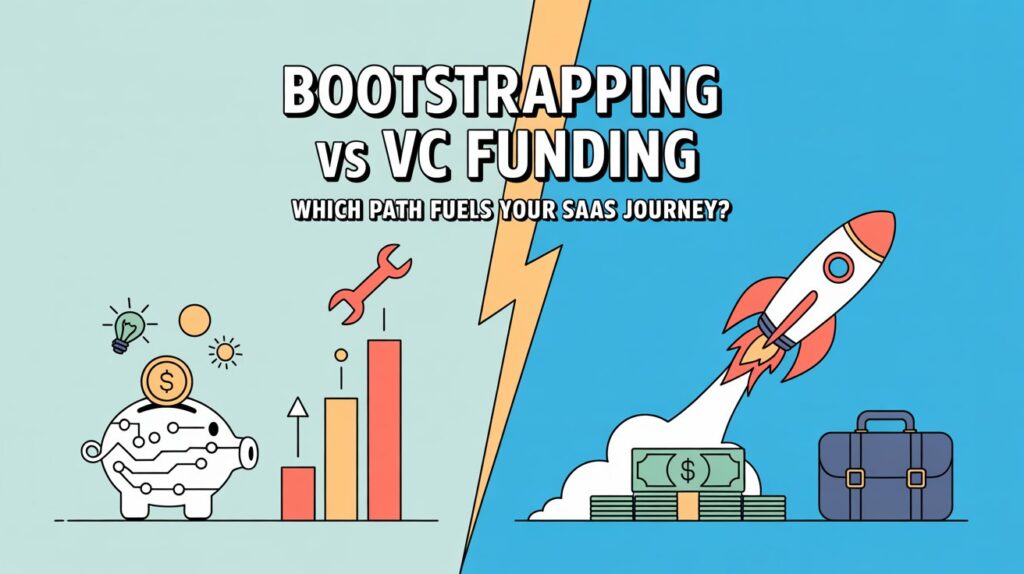
Organic vs. VC Funding: What’s the Best Path to Scale Your Business?
Starting and scaling a business requires capital. For entrepreneurs in the United States, choosing the right business funding options can determine whether your venture thrives or struggles to survive. Two primary paths exist: organic funding, also known as bootstrapping, and venture capital (VC) funding. Each approach offers distinct advantages, challenges, and implications for ownership, control, and growth potential.
This comprehensive guide examines both funding strategies to help you make an informed decision about which path aligns with your business goals, risk tolerance, and long-term vision. Understanding these startup funding alternatives is crucial for any founder looking to navigate the complex landscape of business financing.
Understanding Organic Funding (Bootstrapping)
Organic funding refers to building a business using personal savings, revenue generated by the company, and minimal external financing. Bootstrapped entrepreneurs rely on their own resources and the cash flow from early customers to fuel growth. This approach has gained significant popularity among small business owners who want to maintain complete control over their companies.
The organic funding model typically begins with a founder investing their own money, often called “seed capital from savings.” As the business starts generating revenue, those earnings are reinvested into operations, marketing, and expansion. Many successful companies, including some of America’s most recognizable brands, began with bootstrapping strategies that prioritized profitability over rapid scaling.
Alternative organic funding methods include microloans, credit cards, crowdfunding platforms, and loans from family and friends. These financing options for entrepreneurs allow founders to access capital without giving up equity or decision-making authority.
Venture Capital Funding Explained
Venture capital funding involves raising money from professional investors who provide capital in exchange for equity ownership in your company. VC firms pool money from institutions, wealthy individuals, and other investors to support promising startups with high growth potential. This form of equity financing is particularly common in technology, healthcare, and innovation-driven sectors.
The venture capital process typically involves multiple funding rounds: seed round, Series A, Series B, and beyond. Each round represents a stage of company development, with investors providing increasingly larger amounts of capital as the business demonstrates traction and growth. VC investors not only provide money but also offer mentorship, industry connections, and strategic guidance.
For many startup founders, VC funding represents an opportunity to scale rapidly, access specialized expertise, and build a network of experienced advisors. However, accepting venture capital means sharing ownership and potentially ceding some control over business decisions to investors who have a financial stake in your success.
Key Differences Between Organic and VC Funding
Understanding the fundamental differences between these two business funding options is essential for making the right choice for your specific situation. The following comparison highlights the most significant distinctions:
| Factor | Organic Funding | VC Funding |
|---|---|---|
| Ownership | 100% retained by founder | Diluted based on investment amount |
| Control | Complete decision-making authority | Shared with investors; board seats typical |
| Growth Speed | Slower, sustainable pace | Rapid scaling opportunities |
| Risk Level | Personal financial exposure | Shared risk with investors |
| Time Investment | Focus on operations and profitability | Additional reporting and investor relations |
| Exit Timeline | Flexible, often longer-term | Typically 5-10 years expected return |
| Best Suited For | Service businesses, profitable niches | Scalable tech, high-growth markets |
This comparison demonstrates that neither approach is inherently superior. The right choice depends entirely on your business model, industry, personal goals, and risk appetite as an entrepreneur seeking business financing solutions.
Pros and Cons of Each Funding Method
Advantages of Organic Funding
- Complete ownership: Retain 100% of your company’s equity and profits without sharing returns with external investors.
- Strategic freedom: Make all business decisions independently without investor approval or board interference.
- Customer focus: Prioritize long-term customer relationships over quarterly metrics that VC investors often demand.
- Financial discipline: Develop lean operations and efficient processes out of necessity, building a sustainable business culture.
- No pressure for exits: Build your company according to your timeline rather than investor expectations for returns.
Disadvantages of Organic Funding
- Limited capital: Slower growth potential due to constraints on available working capital and investment capacity.
- Personal risk: Your personal savings and credit may be at stake if the business struggles.
- Missed opportunities: Competitors with VC backing may outpace your growth and capture market share.
- Limited network: Less access to industry connections, mentorship, and strategic partnerships that VCs provide.
Advantages of VC Funding
- Significant capital: Access substantial investment capital to scale quickly and capture market opportunities.
- Expert guidance: Benefit from experienced investors who have supported successful companies and understand market dynamics.
- Credibility boost: VC backing signals market validation, attracting additional customers, talent, and future investors.
- Network access: Leverage investor connections for partnerships, recruiting talent, and strategic guidance.
- Shared risk: Loss is distributed among multiple stakeholders rather than borne solely by the founder.
Disadvantages of VC Funding
- Equity dilution: Surrender ownership percentage and future profits to investors who funded your growth.
- Loss of control: Board oversight and investor expectations may conflict with your vision and decision-making autonomy.
- Performance pressure: VCs expect significant returns within specific timeframes, creating pressure to prioritize growth over profitability.
- Alignment challenges: Investor interests may diverge from founder priorities regarding exit timing, acquisition offers, or strategic direction.
Which Funding Path Is Right for Your Business?
Selecting between organic funding and venture capital requires honest assessment of several critical factors. Consider the following questions to determine which business funding options align with your situation:
Industry and Business Model: Businesses with predictable revenue streams and lower capital requirements, such as consulting firms or professional services, often thrive with organic funding. Conversely, technology companies requiring significant R&D investment or businesses competing in winner-take-all markets may need VC capital to establish competitive advantages.
Growth Goals: If you aim for gradual, sustainable growth and value independence, bootstrapping provides the freedom to build at your own pace. If you envision rapid market domination and have a scalable concept, venture capital accelerates growth beyond what organic cash flow can support.
Risk Tolerance: Organic funding puts personal finances at risk but preserves company autonomy. VC funding shares financial risk but introduces pressure from investor expectations and potential loss of control over strategic decisions.
Long-Term Vision: Founders who prefer to maintain family businesses or pass companies to future generations typically favor organic funding. Those targeting acquisition, IPO, or significant exits may find venture capital aligns better with their exit-oriented objectives.
Many successful entrepreneurs have built thriving businesses using hybrid approaches, starting with bootstrapping and later accepting VC investment when the company demonstrates traction and requires capital for accelerated growth. This flexibility allows founders to preserve ownership during early stages while accessing growth financing when appropriate opportunities arise.
Frequently Asked Questions
What are the main business funding options available for startups in the United States?
The primary business funding options include personal savings and bootstrapping, venture capital, angel investors, small business loans, lines of credit, crowdfunding, grants, and strategic partnerships. Each option has distinct requirements, implications for ownership, and suitability for different business types and growth stages.
Can I switch from organic funding to VC funding later?
Yes, many companies successfully transition from bootstrapping to venture capital funding after demonstrating product-market fit and revenue traction. Having a proven business model can actually strengthen your negotiating position with VCs and result in better valuation terms.
How much equity do VC investors typically take?
Equity stakes vary widely based on funding round, company valuation, and investor negotiations. Seed rounds commonly involve 10-20% equity dilution, while later rounds may involve smaller percentages. Understanding equity financing basics is crucial before entering negotiations.
Is venture capital funding only for technology companies?
No, while technology startups receive significant VC attention, investors fund companies across industries including healthcare, consumer products, manufacturing, and professional services. Any business demonstrating high growth potential and scalability can attract venture capital interest.
What happens if my VC-backed company fails?
When VC-backed companies fail, investors typically lose their entire investment. Unlike loans, venture capital investments do not require repayment. However, founders may face reputational consequences and potential liability depending on how the business was structured and operated.
How long does it take to secure venture capital funding?
The VC funding process typically takes three to six months from initial contact to closing a round. This timeline includes pitch development, investor meetings, due diligence, and legal documentation. Bootstrap funding, by comparison, happens continuously as you reinvest business revenues.
Conclusion
Choosing between organic funding and venture capital represents one of the most consequential decisions for any entrepreneur. Both business funding options have produced wildly successful companies, and neither approach guarantees success or failure. The optimal path depends entirely on your specific circumstances, including your industry, growth ambitions, risk tolerance, and personal priorities.
Organic funding offers freedom, full ownership, and the ability to build according to your vision without external pressure. This approach suits founders who value independence, prefer sustainable growth, and operate in industries where patient capital deployment leads to long-term success. The financial discipline developed through bootstrapping often creates stronger, more efficient businesses.
Venture capital provides resources for rapid scaling, industry expertise, and valuable networks that can accelerate growth beyond what organic funding allows. For businesses competing in fast-moving markets where first-mover advantage and market share matter significantly, VC funding may represent the only viable path to achieving scale before competitors do.
Ultimately, successful entrepreneurs evaluate their options honestly, choose the path that aligns with their values and goals, and execute with dedication regardless of their chosen financing method. Your business’s success will depend far more on execution, market timing, and adaptability than on whether you chose bootstrapping or venture capital to fund your journey.
Take time to assess your situation carefully, seek advice from mentors who have navigated these decisions, and remember that you can adjust your approach as circumstances evolve. The American entrepreneurial ecosystem offers pathways for businesses of all types and funding preferences to thrive and succeed.
Ready to Explore Your Business Funding Options?
Making informed decisions about financing your business requires careful analysis and expert guidance. Whether you’re just starting your entrepreneurial journey or looking to scale an established company, understanding all available startup funding alternatives empowers you to choose the right path forward.
Read related articles on our blog for additional insights into business financing, growth strategies, and entrepreneurial success. Our comprehensive resources cover everything from bootstrapping techniques to venture capital negotiations, helping you build the knowledge foundation for smart funding decisions.
Contact us for more information about business funding options, strategic planning, and resources available to entrepreneurs in the United States. Our team of experienced advisors can help you evaluate your specific situation and develop a financing strategy that supports your long-term business objectives.
Your entrepreneurial dreams deserve proper financial foundations. Start exploring your options today and take the next step toward building the business you’ve envisioned.