In this guide
In This Guide
- Business planning and market validation
- LLC, sole proprietorship, and S-Corp comparisons
- Registration, EIN, and licensing requirements
- Business banking, accounting, and cash flow management
- Funding options from bootstrapping to SBA loans
- Digital presence, local SEO, and social media marketing
- Customer acquisition, retention, and referral strategies
- Productivity tools, compliance, and growth planning
Disclaimer: This guide provides actionable general guidance for small business owners. However, every business situation is unique. Always consult qualified professionals—including attorneys, accountants, and business advisors—for legal and tax matters specific to your situation. Regulations vary by location, industry, and business structure.
Small Business Guide: Start, Manage & Grow Your Business
Starting a small business is one of the most rewarding—and challenging—adventures you’ll ever undertake. You have an idea, a passion, and the drive to make it happen. But where do you begin? The world is full of advice that assumes you have a massive budget, a team of experts, or years of business experience. That’s not reality for most entrepreneurs.
This guide is designed for real people launching real businesses with limited time, limited budgets, and limited patience for fluff. We’ll focus on what actually matters: taking consistent action toward building something sustainable.
By the time you finish reading, you’ll have a clear roadmap for launching, managing, and growing your small business. Let’s get started.
1. The Foundation: Planning Before You Leap
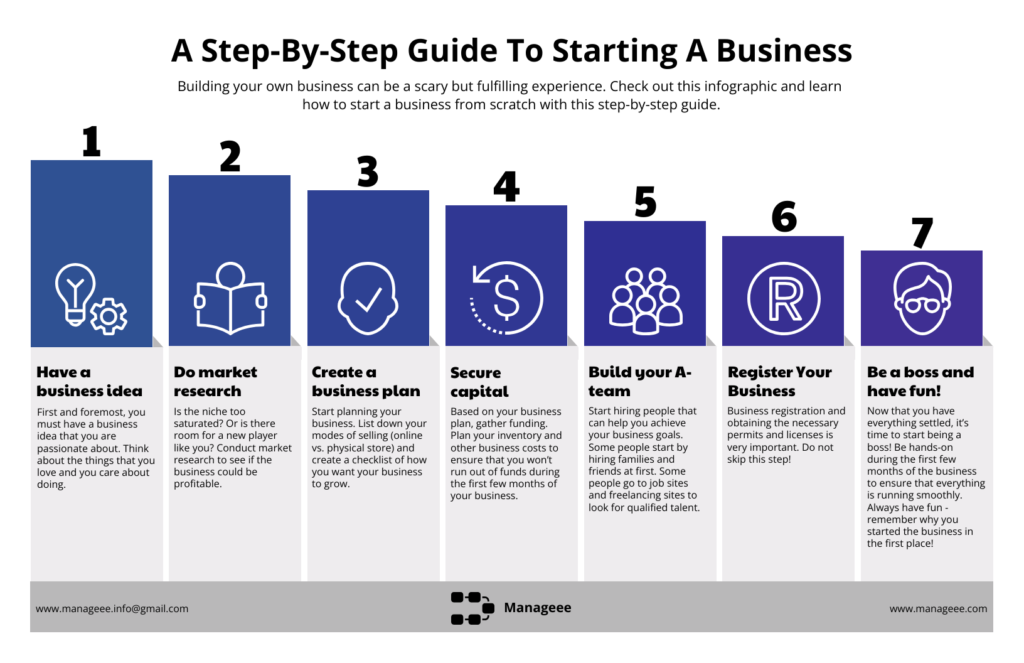
Every successful business starts with a solid foundation. Before you spend a single dollar or sign any paperwork, you need to validate your idea and understand your market. This isn’t about creating a 50-page business plan that sits in a drawer—it’s about thinking clearly about what you’re building and who you’re serving.
Validate Your Business Idea
Before committing time and resources, test your concept:
- Talk to potential customers. Not friends and family—actual people who might pay for your product or service. Ask what problems they face and how they’d solve them today.
- Test the market. Can you pre-sell your product? Offer a pilot service? Even one paying customer validates demand.
- Research competitors. Who else serves this market? What do they do well? Where are the gaps you can fill?
- Calculate the economics. What will it cost to deliver your offering? What’s a realistic price point? Can you make money at that price?
Identify Your Target Market
You cannot serve everyone. Be specific about who your ideal customer is:
- Demographics (age, income, location, profession)
- Pain points and challenges
- Where they spend time (online and offline)
- How they make purchasing decisions
Example: Instead of “restaurants,” specify “family-owned Italian restaurants with 20-50 seats in suburban areas, owned by first-generation immigrants who handle their own marketing.”
Create a Lean Business Plan
You need one page—not fifty. Answer these questions directly:
One-Page Business Plan Template
- What problem do you solve? (One sentence)
- Who experiences this problem? (Your target customer)
- How do you solve it? (Your product or service)
- What makes you different? (Your unique value proposition)
- Who are your competitors? (List 3-5 direct competitors)
- How will customers find you? (Your marketing approach)
- What does it cost to deliver? (Your main expenses)
- What will you charge? (Your pricing model)
- What are your first 90-day goals? (3-5 specific, measurable objectives)
Quick Start Checklist: Business Planning
- □ Interview 5-10 potential customers about their needs
- □ Identify your top 3-5 competitors and analyze their strengths
- □ Document your target customer persona
- □ Complete the one-page business plan above
- □ Calculate minimum viable pricing that covers costs
- □ Set 90-day SMART goals for launch
Tip: Market research matters more than perfection. Launch with a good-enough plan and refine as you learn. Your first customers will teach you more than any business book.
Your First 30/60/90 Days: A Planning Timeline
Use this framework to structure your pre-launch activities:
| Period | Focus Areas | Key Deliverables |
|---|---|---|
| Days 1-30 | Validation, planning, legal structure decision | Completed business plan, entity formation filed, EIN obtained |
| Days 31-60 | Banking setup, website development, brand identity | Business accounts open, website live, initial marketing materials |
| Days 61-90 | Soft launch, customer acquisition testing, operations refinement | First paying customers, feedback collected, processes documented |
2. Legal Structure: Choosing the Right Business Entity
Your legal structure affects everything from how much tax you pay to how much of your personal assets are at risk. The main options are sole proprietorship, LLC, S-Corporation, and C-Corporation. Learn more about business structures from the IRS.
Comparison of Business Structures
| Structure | Liability Protection | Tax Complexity | Administrative Burden | Best For |
|---|---|---|---|---|
| Sole Proprietorship | None—you’re personally liable | Simple (Schedule C) | Minimal | Low-risk hobbies, testing ideas |
| LLC (Limited Liability Company) | Protects personal assets | Moderate (pass-through by default) | Low (annual reports in most states) | Most small businesses |
| S-Corporation | Protects personal assets | Moderate to complex (requires payroll) | Higher (payroll compliance) | Profitable businesses seeking tax optimization |
| C-Corporation | Protects personal assets | Complex (double taxation) | High (formal meetings, filings) | Ventures seeking investors, eventual IPO |
Making Your Decision
Start here:
1. Is your business high-risk (physical products, professional services, handling sensitive data)?
→ Yes: Consider LLC immediately
→ No: Continue to step 2
2. Do you expect significant profits from this business?
→ Yes: Consult an accountant about S-Corp election; the potential tax savings from reducing self-employment tax may justify the additional complexity depending on your specific situation, industry, and state regulations
→ No: Sole proprietorship or LLC works well
3. Will you need outside investors or venture capital?
→ Yes: Consider C-Corp from the start
→ No: LLC or Sole Prop is fine
Important: This is general guidance, not legal or tax advice. If you’re unsure, use a business formation service like LegalZoom, ZenBusiness, or Incfile for basic formation, or consult with a small business attorney for complex situations. The cost ($50-$500) is worth the peace of mind.
Quick Start Checklist: Legal Structure
- □ Research structure options and implications for your situation
- □ Consult with an accountant or attorney if unsure
- □ File LLC formation documents (if applicable)
- □ Obtain EIN from the IRS online
- □ Register DBA if operating under a different name
3. Registration, Licenses, and Permits
This section can feel overwhelming because requirements vary so much by location and industry. We’ll give you a systematic approach to make sure you don’t miss anything critical. For detailed federal requirements, consult SBA’s business structure guide.
Step-by-Step Registration Checklist
Federal Level:
State Level:
Local Level:
Industry-Specific:
Where to Get Help
Regulations vary by location. Your best resources are:
- SBA Local Assistance: Find your nearest Small Business Development Center at sba.gov/local-assistance
- Local Chamber of Commerce: They know the specific requirements for your area
- SCORE Mentors: Volunteer experts who can guide you through the process
- IRS Publication 583: Starting a Business and Keeping Records
Tip: Home-based businesses often face additional restrictions. Check your lease, HOA rules, and local zoning ordinances before investing in equipment or taking on clients.
Compliance Essentials: Beyond Basic Registration
Once registered, small business owners should understand these compliance areas:
ADA Compliance Basics
If you have a physical location or offer services to the public, the Americans with Disabilities Act (ADA) requires reasonable accommodations. Learn ADA requirements and consider:
- Physical accessibility of your location
- Website accessibility standards (WCAG guidelines)
- Communication accommodations for customers
Data Privacy Considerations
If you collect customer data (names, emails, payment info), understand basic privacy requirements:
- CCPA (California): If you have California customers, understand consumer rights to know, delete, and opt out
- General best practices: Only collect what you need, secure data properly, have a privacy policy, and be transparent about data use
- Consider consulting legal counsel for specific compliance requirements
Quick Start Checklist: Registration & Compliance
- □ Obtain EIN from IRS
- □ File formation documents with state
- □ Register for necessary state/local licenses
- □ Look up your NAICS codes
- □ Check industry-specific licensing requirements
- □ Review ADA requirements for your business type
- □ Create basic data privacy policy
4. Financial Foundation: Banking, Accounting, and Budgeting
Mixing personal and business finances is one of the most common mistakes new business owners make—and one of the hardest to fix later. Let’s set up your financial foundation properly from day one.
Separate Your Finances Immediately
This is non-negotiable. Open these accounts before you make your first sale:
- Business checking account: Choose a bank that understands small business. Many offer free business checking for the first year or indefinitely. Credit unions often have lower fees.
- Business credit card: Use it only for business expenses. This creates a clear paper trail and begins building business credit.
- Business savings account: Park your emergency fund and tax reserves here.
Accounting Software Options
| Software | Price | Best For | Key Features |
|---|---|---|---|
| Wave | Free (paid add-ons) | Very small businesses, freelancers | Free accounting, invoicing, receipt scanning |
| FreshBooks | $17-$54/month | Service businesses, freelancers | Time tracking, invoicing, expense reports |
| QuickBooks Online | $30-$90/month | Growing businesses, inventory | Full accounting, payroll integration, reports |
| Xero | $15-$78/month | Businesses wanting automation | Bank feeds, extensive integrations |
Startup Budget Template
First 90-Day Startup Budget
One-Time Costs:
- Business registration and formation: $______
- Licenses and permits: $______
- Website setup and hosting: $______
- Initial inventory or supplies: $______
- Equipment purchases: $______
- Professional services (legal, accounting): $______
Monthly Operating Costs:
- Software subscriptions: $______
- Marketing budget: $______
- Insurance: $______
- Supplies: $______
- Transportation: $______
- Miscellaneous: $______
Reserve Fund: Most financial advisors recommend maintaining 3-6 months of operating expenses as a cash reserve, though the appropriate amount varies based on your business type, revenue consistency, and personal circumstances.
Cash Flow Basics
Cash flow is the movement of money in and out of your business. Many businesses face challenges when cash inflows don’t align with outflows. Key principles:
- Invoice quickly. Don’t wait until end of month to send invoices.
- Follow up on late payments. A friendly call at 30 days prevents 90-day delays.
- Negotiate favorable payment terms. Try to pay suppliers in 30 days while encouraging customers to pay in 15.
- Monitor weekly. Review cash position every week, not just monthly.
Payment Processing
Modern payment processing makes accepting money straightforward. Major providers include:
- Square: Good for in-person, simple setup, no monthly fees
- Stripe: Excellent for online, developer-friendly
- PayPal Business: Widely recognized, easy for customers
- Consider: Hardware costs, processing fees (which vary by provider, transaction type, and volume—typically ranging from around 2-4% plus per-transaction fees), and settlement times
Business Insurance Basics
Insurance protects your business from unexpected losses. Key types to consider:
- General Liability Insurance: Covers third-party injuries, property damage, and advertising injury
- Professional Liability (E&O): Protects against claims of negligence or inadequate work (essential for consultants, accountants, attorneys)
- Property Insurance: Covers your equipment, inventory, and physical space
- Workers’ Compensation: Required in most states if you have employees; covers workplace injuries
- Cyber Liability Insurance: Protects against data breaches and cyber incidents (increasingly important for businesses handling customer data)
Tip: Startup costs vary widely by business type. Service-based businesses often have lower initial costs than product-based businesses. Get quotes from multiple providers and only purchase coverage that addresses your actual risks.
Quick Start Checklist: Financial Foundation
- □ Open business checking account
- □ Open business credit card
- □ Set up business savings for reserves
- □ Choose and set up accounting software
- □ Establish invoicing system
- □ Set up payment processing
- □ Research and obtain necessary business insurance
- □ Build 3-6 month cash reserve
5. Funding Your Small Business
Most small businesses don’t need a million-dollar investment. They need enough to cover launch costs and sustain operations until revenue exceeds expenses. Here’s how to think about funding.
Funding Options Comparison
| Method | Amount | Requirements | Timeline | Cost |
|---|---|---|---|---|
| Bootstrapping | Self-funded | Personal savings | Immediate | None (but opportunity cost) |
| SBA Loans | $500-$5M+ | Good credit, business plan, collateral | 30-90 days | Varies (check current rates at sba.gov) |
| Microloans | $500-$50,000 | Varies by lender | 2-6 weeks | Varies |
| Business Grants | Varies widely | Varies by grant | Varies | Free money (rare and competitive) |
| Credit Cards | Based on credit limit | Personal/business credit | Immediate | High APR if carried |
| Friends & Family | Negotiated | Relationship trust | Varies | Define terms clearly |
What Most Startups Actually Need
Startup capital requirements vary significantly based on business type, industry, location, and whether you’re starting from home or leasing space:
- Service businesses often have lower startup costs (potentially under $1,000 for basic tools, licensing, and marketing)
- Product businesses typically require more for inventory, equipment, and fulfillment
- All businesses should budget for 3-6 months of personal living expenses
- Additional costs for equipment, inventory, or initial marketing may range from $500 to $5,000+ depending on your business model
Warning – Avoid Predatory Lenders: Steer clear of merchant cash advances, payday-style business loans, and any lender that guarantees approval without reviewing your business. These often have extremely high effective interest rates. SBA guidance on funding options recommends sticking with SBA-backed lenders, credit unions, or established online lenders with transparent terms.
Resources for Finding Funding
- SBA Lender Match: Connects you with approved SBA lenders based on your profile
- SCORE Mentors: Help you prepare loan applications and strengthen your business case
- Local CDFIs: Community Development Financial Institutions often serve underserved markets
- Microloan Programs: Kiva (crowdfunded microloans), Accion, local economic development agencies
Tip: Before seeking outside funding, get really clear on what problem the money solves. Investors (even lenders) want to see that you understand your business economics and have a realistic plan for repayment or return.
6. Building Your Digital Presence
Your potential customers are searching for businesses like yours online right now. If they can’t find you, they’ll find your competitors. A digital presence isn’t optional—it’s foundational.
Website Essentials
You need a website even if you have a physical location. It’s your digital storefront that’s open 24/7.
Website Platform Options
| Platform | Price | Best For | Ease of Use |
|---|---|---|---|
| Squarespace | $12-$40/month | Beautiful portfolios, service businesses | Very easy |
| Shopify | $29-$299/month | E-commerce, product sales | Easy |
| WordPress + WooCommerce | $5-$50/month + hosting | Maximum flexibility, content sites | Moderate learning curve |
| Wix | $14-$49/month | Simple sites, restaurants, salons | Very easy |
| Weebly (Square) | $6-$26/month | Simple e-commerce | Very easy |