In this guide
Small Business Success: A Practical Step-by-Step Guide to Launching, Growing, and Scaling Your Business in 2024
Running a small business means wearing countless hats with limited time and budgets, all while competing against larger companies with deeper pockets. You understand the daily reality: every decision matters, every dollar counts, and the margin for error feels razor-thin. This guide cuts through the noise. Below you’ll find actionable, implementable tactics you can start using immediately. No jargon, no fluff—just proven strategies that deliver measurable results you can track and optimize over time.
Laying the Foundation: Essential First Steps to Launch Your Small Business
Before investing money or time into your business idea, you need confirmation that people will actually pay for what you’re selling. Market validation doesn’t require expensive research firms. Start by talking to potential customers directly—ask them what problems they face, what solutions they’ve tried, and whether they’d pay for your offering. Create a simple one-page landing page describing your product or service and drive traffic to it using social media ads with a small budget. Track how many people sign up for more information or attempt to purchase. If you can’t get traction in a test phase, reconsider your approach or your target market before committing significant resources.
Choosing the right legal structure affects your taxes, liability, and ability to raise funding. Many small business owners find that forming a Limited Liability Company (LLC) works well for their situation because it separates personal and business assets, provides tax flexibility, and establishes professional credibility. However, the optimal structure depends on your specific circumstances including business type, income level, risk exposure, and tax situation—consulting with a business attorney or CPA is recommended before forming any entity. Sole proprietorships work for very small, low-risk operations but expose your personal assets to business lawsuits and debts. Corporations offer stronger protection but involve more paperwork and formalities. Resources like LegalZoom or Nolo provide affordable legal guidance for formation decisions. Register your business name with your state, obtain an Employer Identification Number from the IRS (free and takes minutes online at irs.gov), and check local zoning requirements to ensure your business location complies with regulations.
Your business plan doesn’t need to be a 30-page document destined for a banker’s drawer. Create a simplified version that answers three core questions: What are you selling, to whom, and how will you make money? The U.S. Small Business Administration offers free business plan templates and planning guides. SCORE provides mentorship connections and workshop materials at no cost. Use these resources rather than paying consultants hundreds of dollars for plans you can build yourself with free guidance.
Securing Capital: Financing Options for Small Businesses
Many promising small businesses fail not because they had bad ideas but because they ran out of money before reaching profitability. Understanding your financing options early prevents desperate decisions later. SBA microloans offer amounts up to $50,000 with reasonable interest rates and business development support—visit SBA’s microloan program page for current terms. The U.S. Department of Commerce Business USA portal aggregates information about federal grant programs, though remember that grants are highly competitive and shouldn’t be your primary funding strategy. Community Development Financial Institutions provide another avenue, often serving underserved markets that traditional banks overlook.
Alternative financing has expanded dramatically. Platforms like GoFundMe Business, Kickstarter, and Indiegogo allow you to pre-sell products or services while building community support. Invoice factoring lets you receive immediate payment on outstanding invoices for a percentage fee. Equipment financing lets you acquire necessary tools without large upfront costs. Each option carries different terms, costs, and implications for your business, so evaluate them based on your specific situation rather than chasing the most visible marketing campaigns.
Before applying for any loan, review your personal and business credit reports. Lenders use these scores to determine approval and interest rates. Pay down existing debts, correct any errors on your reports, and establish business credit by opening a business bank account and using business credit cards responsibly. Prepare a compelling loan application by documenting your business history, current financial position, how you’ll use the funds, and realistic projections for repayment. Businesses with organized financial records and clear plans receive funding more consistently than those that appear disorganized or uncertain.
Cash Flow Mastery: Managing Money for Small Business Success
Cash flow challenges affect many small businesses significantly—you can be technically profitable on paper while struggling to pay bills because money arrives and leaves at different times. The solution isn’t necessarily earning more—it’s managing what you have more effectively. Start by creating a 13-week cash flow forecast that tracks expected income and expenses week by week. This gives you visibility into upcoming shortfalls before they become crises, allowing time to arrange financing or adjust spending.
Inventory management directly impacts your cash position. Every item sitting on a shelf represents money you can’t use for other purposes. Implement just-in-time inventory practices where possible, ordering stock only when customers place orders or maintaining minimal inventory based on historical sales patterns. If you’re selling products, regularly review which items move quickly and which collect dust. Consider liquidating slow-moving inventory at discount prices to free up working capital rather than tying up funds indefinitely.
Negotiating favorable payment terms strengthens your cash position from both sides. When paying vendors, negotiate Net-60 or Net-90 terms rather than accepting standard Net-30. When collecting from customers, invoice immediately upon delivery rather than at month-end. Offer small discounts for early payment—typically 2% off for payment within 10 days—to incentivize faster cash receipt. These practices require discipline and sometimes difficult conversations, but they dramatically improve your ability to meet obligations without emergency borrowing.
Digital Foundation: Essential Tools and Technologies for Small Businesses
Your technology choices compound over time. Selecting the right tools early prevents costly migrations later while selecting the wrong ones wastes money and creates frustration. For payment processing, Square and Stripe offer straightforward integration, reasonable transaction fees, and free basic hardware for accepting cards. Both platforms scale with your business, adding features as your needs grow without requiring platform changes.
E-commerce capability has become essential for nearly every business, not just online retailers. Shopify provides an accessible starting point with templates designed for non-technical users, built-in payment processing, and apps that extend functionality as your store grows. Their basic plan includes everything most small businesses need to sell online effectively. If you need something simpler or free, platforms like WooCommerce (WordPress plugin) or Big Cartel offer alternatives with different trade-offs.
Project management tools like Trello and Asana offer free tiers sufficient for small teams. These platforms help you track tasks, assign responsibilities, set deadlines, and maintain visibility across projects. For accounting, Wave provides free income tracking, expense management, and invoicing while QuickBooks offers more comprehensive features as your needs expand. FreshBooks provides another mid-tier option with time tracking and project management capabilities. The goal is maintaining organized financial records without expensive software or bookkeepers until your business reaches a size that justifies professional support.
Marketing That Works: Low-Cost Tactics for Small Business Growth
Effective marketing for small businesses focuses on maximizing return from limited resources rather than matching the budgets of larger competitors. Local SEO optimization ensures you appear when customers in your area search for what you offer. Claim and optimize your Google Business Profile completely—fill every field, add photos regularly, respond to all reviews, and post updates when possible. This free listing often ranks above paid advertisements for local searches and costs nothing but your time. Use Google Search Console to monitor your website’s search performance and Google Analytics to understand visitor behavior.
Social media presence requires strategic selection rather than trying to maintain everywhere simultaneously. Identify which platforms your specific customers use most frequently and focus your efforts there. A home contractor might find more success on Facebook and Nextdoor, while a graphic designer might prioritize Instagram and LinkedIn. Create a sustainable posting schedule—twice weekly typically works better than attempting daily posts that burn you out. Use scheduling tools like Hootsuite or Buffer to maintain consistency. Content ideas include behind-the-scenes looks at your operation, customer testimonials (with permission), educational posts about your industry, and responses to relevant trending topics.
Email marketing delivers strong return on investment for many small businesses, particularly in e-commerce and service industries. Mailchimp offers free tiers for small contact lists, and the platform integrates with most e-commerce and website tools—verify current plan limits directly on their pricing page as terms change. Build your list by offering something valuable in exchange for email addresses—a discount, free guide, or exclusive content. Send newsletters monthly and promotional emails sparingly, always providing genuine value rather than pure sales pitches. Track open rates and click-through rates using your platform’s analytics to understand what content resonates with your audience and adjust accordingly.
Building Your Online Presence: E-Commerce Essentials for Small Businesses
Even service-based businesses benefit from e-commerce capability. Customers expect to research, compare, and purchase online. Without this functionality, you’re ceding customers to competitors who make buying easy. Platform selection depends on your product type and technical comfort. Shopify handles physical products well with built-in inventory management, shipping integration, and checkout optimization. WordPress with WooCommerce offers more customization flexibility if you have technical skills or access to developer help.
Product photography significantly impacts conversion rates, and you don’t need expensive equipment. Use natural light near windows, shoot against clean backgrounds, and capture multiple angles. Smartphones now produce images suitable for e-commerce when used correctly. Edit photos using free tools like Canva to ensure consistent sizing and professional appearance. Your images represent your brand before customers read any descriptions—invest time getting them right.
Payment integration should minimize friction in the checkout process. Offer multiple payment methods including major credit cards, Apple Pay, Google Pay, and digital wallets like PayPal or Venmo for Business. High cart abandonment rates often result from complicated checkout experiences. Set up your shipping logic to calculate real-time rates rather than estimating, and display shipping costs early rather than surprising customers at checkout. Start with straightforward options and add complexity (international shipping, custom packaging, subscription models) only when you have bandwidth to manage them effectively.
Legal Compliance and Tax Planning for Small Businesses Without Expensive Lawyers
Legal requirements exist at federal, state, and local levels, and navigating them yourself saves thousands annually. Federal obligations typically include income tax filing, employer identification number registration, and industry-specific regulations. The IRS Small Business Guide provides federal tax information in plain language. State requirements often encompass sales tax collection, state income tax filing, and worker classification rules. Local requirements may include business licenses, zoning permits, and health inspections depending on your business type.
Create a compliance checklist specific to your situation and business type. Check with your state business portal and local chamber of commerce for requirements. Affordable legal services like LegalZoom or Nolo can handle routine filings at fraction of traditional attorney costs. Consider seeking BBB accreditation if appropriate for your industry, as it builds consumer trust. Maintain a dedicated folder (physical or digital) for all compliance documents, licenses, and registrations, and set calendar reminders for renewal deadlines. Missing renewals can result in penalties, suspended operations, or legal complications.
Accounting software handles most bookkeeping tasks without bookkeepers. Wave offers free income and expense tracking suitable for many small businesses. FreshBooks adds time tracking, project management, and more sophisticated invoicing at reasonable cost while QuickBooks provides enterprise-level features for complex businesses. Set aside time weekly to record transactions, reconcile accounts, and categorize expenses properly. This discipline makes tax preparation straightforward and provides visibility into your business performance. Engage professional help (accountant or bookkeeper) when your business complexity exceeds your software capabilities or when quarterly estimated tax payments become stressful.
Hiring and Retaining Talent on a Small Business Budget
Most small businesses hire their first employee or contractor before they’re truly ready. This decision significantly impacts cash flow, requiring careful planning. Start by clearly defining roles and responsibilities. Avoid vague hiring based on anticipated needs—hire for specific, current gaps. Consider whether you need employees or whether freelancers and contractors better suit your situation. Contractors provide flexibility without payroll tax obligations, benefits requirements, or termination complexities.
Building an attractive company culture doesn’t require unlimited budgets. Focus on factors that matter to employees: flexible scheduling when possible, remote work options for appropriate roles, clear communication about expectations and performance, and genuine recognition of contributions. Small gestures often matter more than compensation alone. A handwritten thank-you note, public appreciation during team meetings, or involvement in decision-making creates loyalty that supplements inadequate salaries.
Retention matters more than hiring because replacement costs consume significant resources. Every employee who leaves represents lost institutional knowledge, recruitment expenses, training time, and productivity gaps during transitions. Create systematic onboarding that sets new hires up for success rather than expecting them to figure everything out independently. Conduct stay interviews periodically, asking long-term employees what keeps them satisfied and what could improve. Address legitimate concerns proactively rather than waiting until someone announces their resignation.
Customer Experience: Turning First-Time Buyers into Loyal Advocates for Your Small Business
Customer acquisition and retention costs vary significantly by industry and business model, but many businesses find that retaining existing customers requires less investment than acquiring new ones. Yet many small businesses focus exclusively on marketing for new customers while neglecting the experience of people who’ve already chosen them. Start with personalized follow-ups after purchases or service completion. A thank-you email referencing specific details (what they bought, what they mentioned during consultation) feels far more genuine than automated generic messages.
Loyalty programs don’t require sophisticated technology or large budgets. Simple punch cards work for many retail and service businesses. For e-commerce, offer exclusive discounts to previous customers rather than always targeting new buyers. Some businesses create tiered rewards based on lifetime value, providing increasing benefits to their best customers. The key is acknowledging and rewarding continued relationship rather than treating every transaction as isolated.
Reviews shape purchasing decisions for most consumers. Actively request reviews from satisfied customers through follow-up emails, text messages, or in-person requests. Make the process easy by providing direct links to review platforms. Respond to all reviews—both positive and negative—professionally and promptly. Negative reviews handled well demonstrate your commitment to customer satisfaction and often convince future customers more effectively than glowing positive reviews alone. Consider implementing a system for collecting customer feedback regularly, identifying issues before they escalate and recognizing what you’re doing well.
Risk Mitigation: Protecting Your Small Business from Common Pitfalls
Every small business faces identifiable risks that proactive planning can mitigate. Over-reliance on a single customer creates existential risk—one lost client can eliminate your revenue entirely. Diversify your customer base intentionally, even if it means accepting smaller initial orders from multiple clients rather than maximizing revenue from one source. Many financial advisors suggest monitoring customer concentration as a risk indicator, though appropriate thresholds vary by industry and business model.
Inadequate insurance threatens your personal assets and business continuity. At minimum, general liability insurance protects against customer injuries and property damage claims. Professional liability (errors and omissions) coverage protects service businesses against claims of negligence or inadequate work. If you have employees, workers’ compensation insurance is legally required in most states. Work with an independent insurance agent who represents multiple carriers to find appropriate coverage at competitive rates—don’t simply accept whatever policy your industry association offers without comparison shopping.
Emergency planning prepares you for disruptions rather than scrambling reactively. Maintain backup systems for critical functions: cloud-based data storage, relationships with backup vendors, documented procedures others could follow if you’re unavailable. Create a basic continuity plan answering: What would we do if our primary location became unavailable? What if a key employee left suddenly? What if a major customer didn’t pay? You don’t need elaborate documents, but thinking through scenarios in advance enables faster, better decisions when problems arise.
Scaling Smart: Growth Strategies for Small Business Expansion
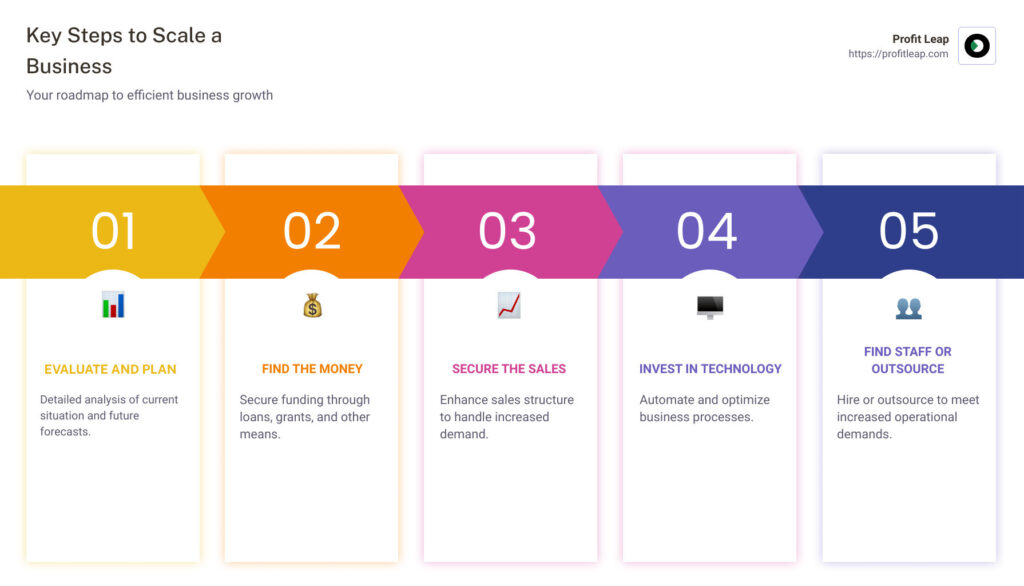
Growth requires resources, but smart scaling uses existing assets more effectively rather than simply adding costs. Before expanding, ensure your current operations run smoothly—scaling dysfunction merely magnifies problems. Test new markets by serving existing customers’ branches or locations in new areas before investing heavily in geographic expansion. This approach validates demand without significant commitment.
Product line expansion spreads customer acquisition costs across more offerings. A restaurant adding catering services, a retailer introducing complementary products, or a consultant creating online courses—each example serves existing customers with new offerings that require relatively modest additional investment. The key is identifying products or services that leverage your existing capabilities, relationships, and infrastructure.
Strategic partnerships create mutual benefit without significant cash investment. A wedding photographer partnering with wedding planners, a fitness studio aligning with nutritionists, or a software company integrating with complementary tools—each arrangement generates referrals without acquisition costs. When evaluating partnerships, ensure the arrangement benefits both parties genuinely. One-sided deals quickly collapse and damage reputations.
Franchising becomes relevant only for businesses with proven systems, strong brand recognition, and documented operational processes. The International Franchise Association provides education and networking for businesses exploring franchising. Most small businesses should focus on organic growth through operational excellence and customer satisfaction rather than complex franchise structures that require significant legal, operational, and financial resources to implement properly.
Leveraging Support: Government Programs, Mentors, and Networks for Small Businesses
Small business support resources exist throughout the country, yet many owners never use them. The Small Business Administration provides loans (including 7(a), microloans, and CDC/504 programs), counseling, training, and contracting assistance through local offices and online platforms. The SBA 8(a) business development program offers additional support for qualifying businesses. SCORE connects businesses with experienced mentors who volunteer their expertise at no cost through their chapter locator. Local Small Business Development Centers offer free or low-cost consulting, training, and resources tailored to regional markets. For rural businesses, USDA rural business programs may provide additional opportunities.
Industry associations provide networking, education, and advocacy relevant to your specific sector. The National Federation of Independent Business (NFIB) represents and supports small businesses at policy levels. The U.S. Chamber of Commerce offers resources, networking events, and local chapter involvement opportunities. Industry-specific associations often provide specialized training, certification programs, and supplier discounts unavailable elsewhere.
Successful small business owners actively engage support systems rather than attempting to solve everything independently. Schedule monthly time to review available resources, check for new programs matching your needs, and connect with mentors or advisors. Building these relationships before you desperately need help ensures you have support when challenges arise. Most support organizations report that businesses using their resources consistently outperform those attempting isolation—take advantage of what’s available rather than struggling alone.
Frequently Asked Questions About Small Business Success
What are the essential first steps to launch a small business?
Start by validating your business idea through market research with potential customers. Choose a legal structure based on your specific circumstances—consider consulting with a business attorney or CPA. Register your business name with your state, obtain required licenses specific to your industry and location, open a dedicated business bank account, and create a simplified business plan using free resources from the SBA website. These foundational steps establish professional legitimacy and protect your personal assets.
How can small businesses obtain funding and manage cash flow?
Explore SBA financing options including microloans up to $50,000, 7(a) loans, and CDC/504 real estate financing. Government grants are available through programs like SBA’s small business innovation research (SBIR) grants and Business USA. Community development financial institutions serve underserved markets. For cash flow management, implement weekly or biweekly forecasting, invoice immediately upon delivery, negotiate extended payment terms with vendors, and maintain operating reserves.
What low-cost marketing tactics work best for small businesses?
Local SEO optimization through Google Business Profile remains effective—claim and fully optimize your listing with photos, posts, and review responses. Consistent social media presence on platforms where your customers spend time using sustainable posting schedules. Email marketing with platforms like Mailchimp for customer retention. Networking with complementary non-competing businesses for referrals. Systematically encouraging customer reviews on Google, Yelp, and industry-specific platforms. Track results using Google Analytics to understand what drives traffic and conversions.
What digital tools are recommended for small business growth?
Square or Stripe for payment processing with straightforward integration. Shopify for e-commerce with templates designed for non-technical users. Wave or QuickBooks for accounting based on your complexity needs. Trello or Asana for project management. Canva for creating professional graphics. Google Analytics and Search Console for website traffic tracking. Hootsuite or Buffer for social media scheduling.
What are common legal and tax obligations for small businesses?
Federal, state, and local tax registration and filing requirements. Employer Identification Number obtainment from the IRS. Quarterly estimated tax payments for self-employed and business owners. Sales tax collection and remittance where applicable. Industry-specific licenses from state boards or professional organizations. Annual reports and renewal filings required by your state. Workers’ compensation insurance when you have employees. Use the IRS Small Business Guide and affordable legal services like LegalZoom or Nolo to manage compliance efficiently without expensive lawyers until situations become complex.
How can small businesses attract and retain talent?
Offer competitive benefits within realistic budgets—flexible scheduling, remote work options, professional development opportunities, and meaningful work. Create clear growth paths that show employees how they can advance. Foster positive culture through genuine recognition, inclusive decision-making, and honest communication. Consider hiring freelancers and contractors for specialized needs, maintaining flexibility while accessing expertise. Retention requires proactive attention—conduct stay interviews with long-term employees, address legitimate concerns before resignation, and build environments where people want to work.
Where can small business owners find government grants and support programs?
The SBA website (sba.gov) serves as a central hub for federal small business resources. SCORE mentorship connects you with experienced advisors at no cost through local chapters. Local Small Business Development Centers provide free consulting tailored to your regional market. Your local chamber of commerce offers networking and resources. Industry-specific associations provide specialized support. Set aside time monthly to